defed1
Members
-
Benutzer seit
-
Letzter Besuch
Alle Inhalte von defed1
-
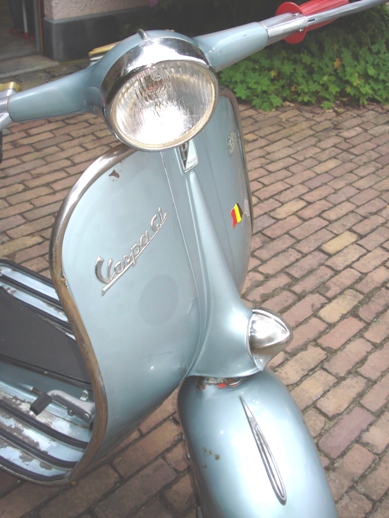
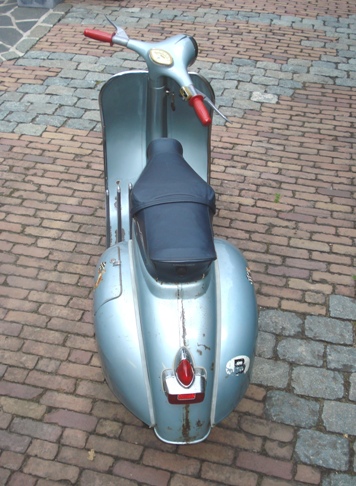
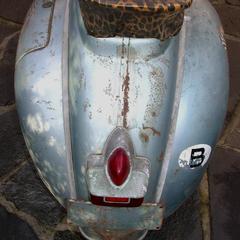
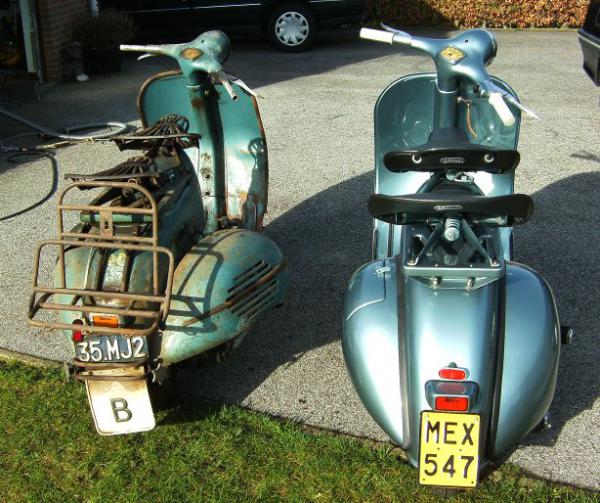
Nicht nur schwedische und dänische VGL1, aber auch belgische VGL1! VGL1 vespa sind für die Italiener immer Exportmodelle, d.h. für Nord-Europa hergestellt in Italien (Pontadera) und für Belgien, Holland hergestellt bei MISA, Brüssel, Belgien. Die Modelle sind, wie gesagt, angepasst für das Exportland (Leuchte, Räder,...). In Italien ist der Vespa VB1 vergleichbar. In Belgien gibt es noch "viele" VGL1, aber auch VGLA, VGLB, ... alle montiert bei MISA.
-
Succes, sieht Top aus. Trittleisten Restauration Diese Leute kennst du wahrscheinlich: http://www.veteranvespaclub.co.uk/1008.html
-
@ Baba's Ich glaube du hast recht, also T4 (VGLA - VBA rahmen ohne Batterie) Baujahr: (spät 1958) anfang 1959 Grüße aus Belgien Defed 1 (Edwin)
-
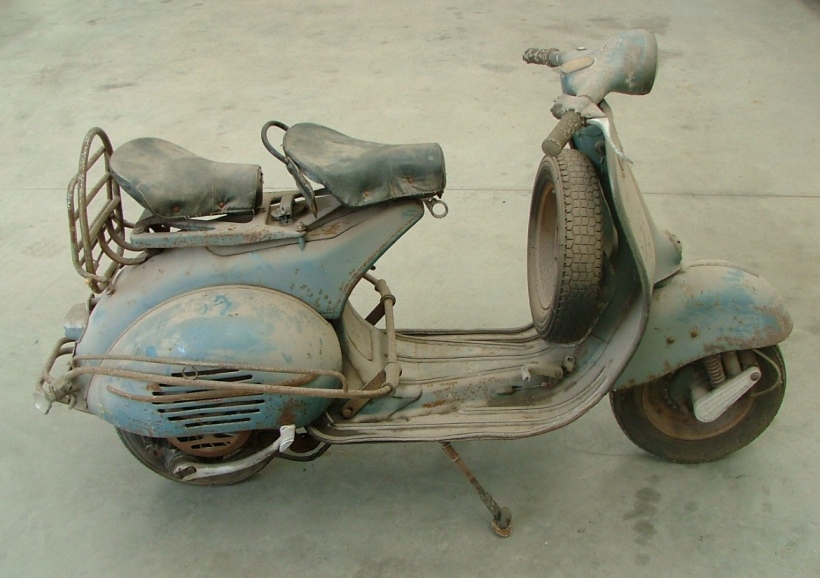
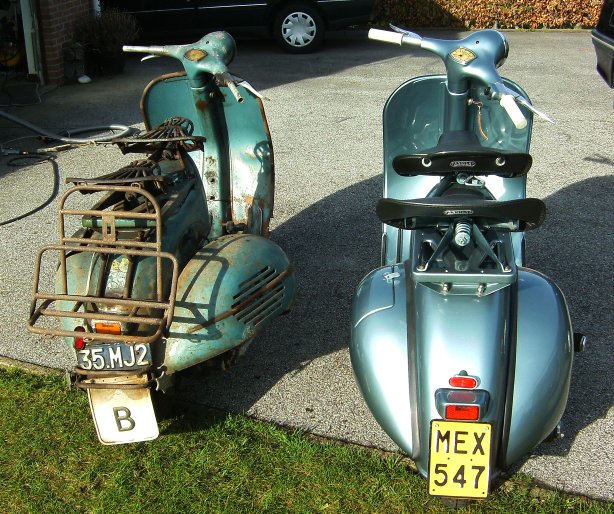
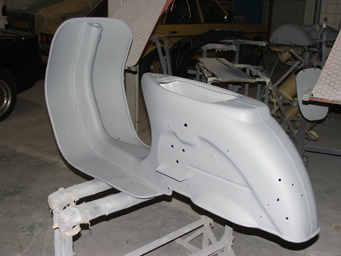
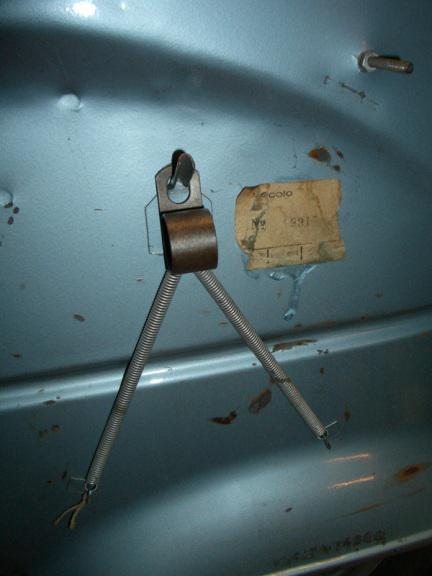
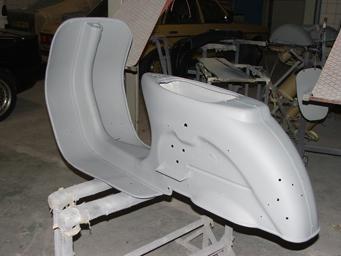
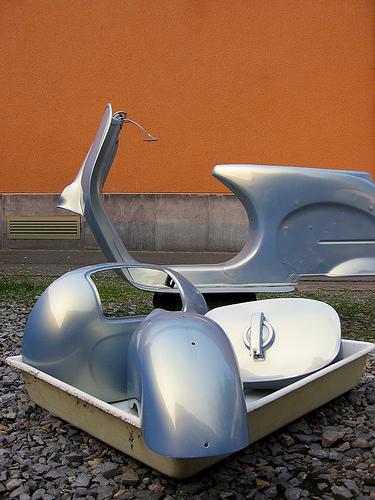
Interesting topic! about that horizontal line (Sicke), this is a typical feature for the first largeframe Vespe made in Italy at the end of 1958, beginning 1959. This horizontal line can be seen on some early vba and vna models made in Italy. See pictures attached (first picture = vba 1958, second picture is dutch vgla (like vba) from 1959, last picture = vna 1958). Thanks for the loan of these pictures. Thefore I think its a vba frame (without battery) or a vna frame, because some vna/vnb vespe had also a floor mat in the middle. If the frame is original and not "adapted" , there should be a framenumber under the horizontal line(Sicke)near the border of the frame. Is the paint still original? Perhaps you can try to remove the paint around that area. The number must be there! Good luck.
-
Gibst auch schon export nach Belgien?
-
Super Arbeit! Aber was machtst du mit den Bodenblech? Gibt es eine Möglichkeit die Originallack zu simulieren, damit es auch da Patinös und verwittert aussieht? Ich habe das gleiche Problem am Vespa VGLA 1959. Grüsse aus Belgien
-
Und guck jetz mal hier, Bilder auf "Scooterhelp" ... http://www.scooterhelp.com/scooters/VGLA1T.gl.html Hast du schon Neuigkeiten zu melden?
-
Stimmt!!
-
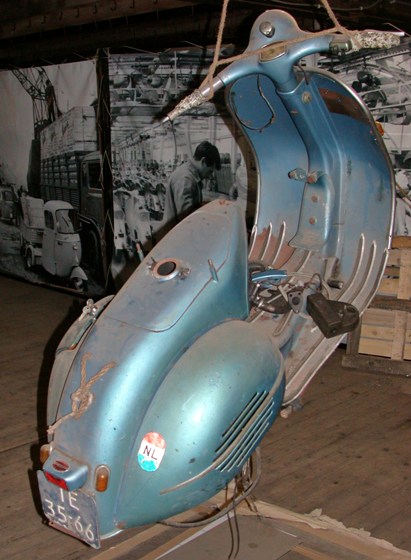
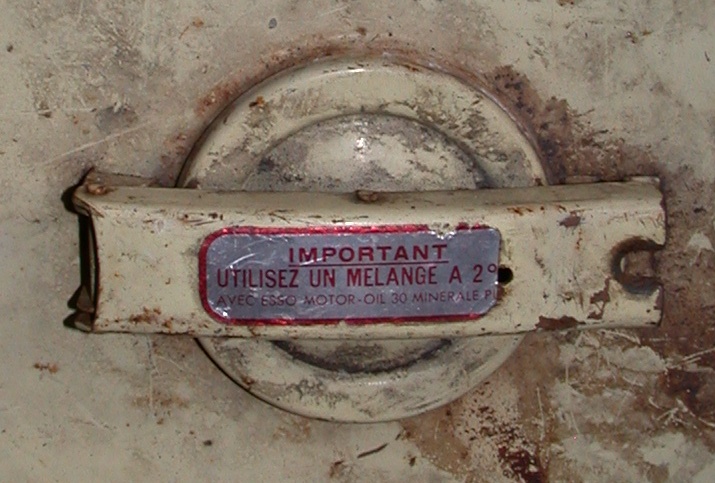
Es gibt also Blinker vorne, hinter und der Blinkerschalter überhalb dem Lichtschalter. Ist kein Zubehörteil, aber wurde gelegentlich auf Niederländische vespas montiert (siehe abbildung). Ich glaube nicht dass da ein Zusatzscheinwerfer montiert ist, aber wahrscheinlich einer Kaskade des Horns... Ich sehe keine Löcher am Beinschild wo das Logo gehört, also ich wette dass am Aussenseite ein geklebtes MISA logo (Vespa G.L.) hängt. Auch die Aufkleber am Tankdeckel überprüfen. Wenn der Text in Rot steht und französisch ist (Siehe Abbildung), bist du sicher dass es eine MISA Vespa ist. Und jetzt schnell weitere Fotos machen Grüße aus Belgien
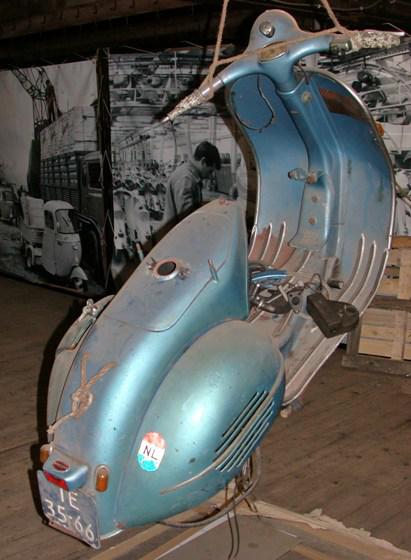
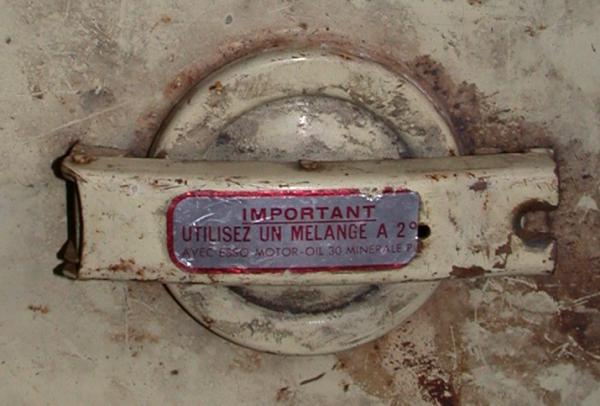
-
So ist es, nur sind die GL Export-Modelle (Schweden, Benelux,...) immer basiert auf VB1, VBA und VBB Basis (VB1 wird VGL1, VBA wird VGLA1, VBB wird VGLB1) Vielen Glück mit dem Verkauf! VGL touring 1957.bmp VGL touring 1957.bmp VGL touring 1957.bmp VGL touring 1957.bmp
-
Ist einen GL (Vespa GL 150 Bj 1957 VGL1T*06287*) aber Exportmodel aus Schweden.
-
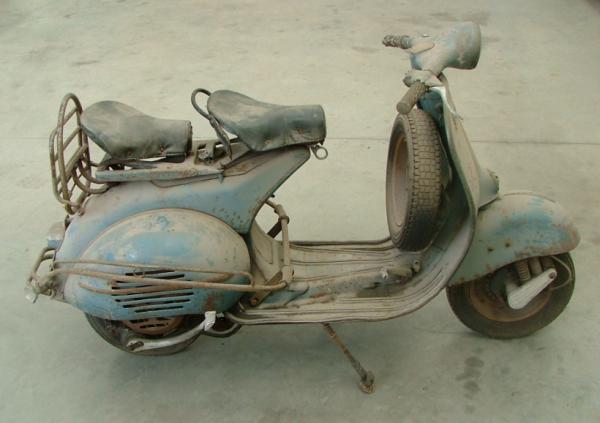
Wie T4 und SolidSolutions gesagt haben, händelt es sich um einen Holländischen GL. Diese Vespa wurde damals in Belgien (bei Misa) hergestellt zwischen 1959 und 1961. Chassisnummer ist VGLA1T ..., Motornummer VGLA1M. Vergleichbar mit VBA, nur 10" und geklebtes logo "Vespa GL" am Beinschild. In Belgien und Holland ist diesen Vespa nicht ganz selten. Preisvorschlag 1500 euro. Falls Originallack, "keinen" Rost und alle Papiere dabei 2500 bis 3000 euro. Vielen Glück damit.
-
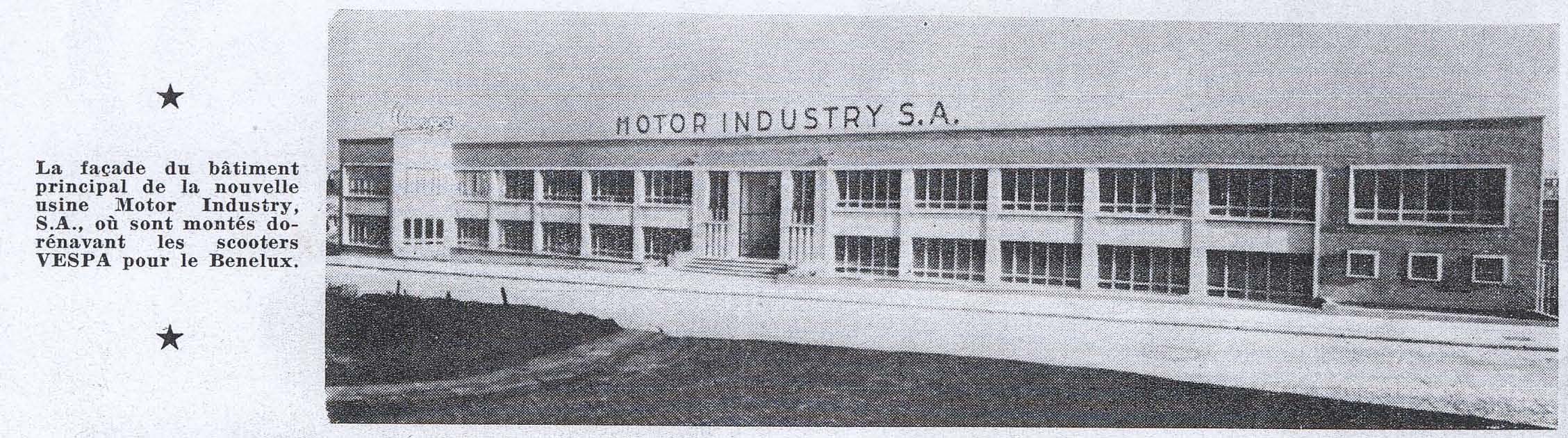
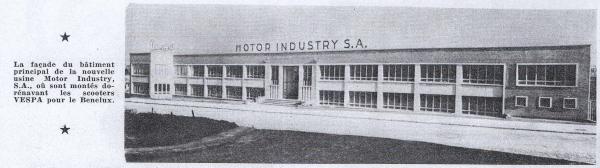
In Nord Europa hat es auch GL vespas gegeben. Siehe auch http://www.meshmen.com/touring/. Ich glaube diese GL ist keine Benelux (Misa) GL, sondern eine Italienische Vespa für Export. In Italien sind damals VGLA (wie VBA) und VGLB (wie VBB) Vespas gemacht, aber nur für Export. Bei Misa (Motor Industry s.a.) in Belgien sind auch VGLA und VGLB Vespas angefertigt, immer mit geklebten emblem. Grüsse aus Belgien
-
Hi Minikin, I wish I could answer your question, but for the moment the only information I received from an ex Misa employee is that this number is an internal Misa number. Their should not exist any relation to the VIN-number. As long as no ?official? production data reappear, we should be satisfied with oral tradition?
-
Vielleicht würde die Schriftzug damals in Österreich montiert. Gibt es hier noch Misa Vespa GS woran der schriftzug kontrolliert werden kann? Mein Deutsch Danke für dein pdf dokument Entschuldige daß ich ihre topic verschmutzt habe mit diesen Misa Beitrag
-
Antworte bitte in Deutsch, kein Problem. Sieht das Deutsche logo so aus?
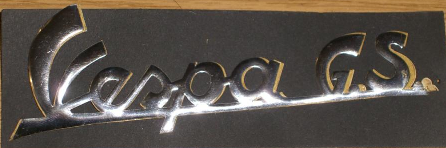
-
But the Misa plates look different and the Misa frame came from Italy (except for the GS2?)
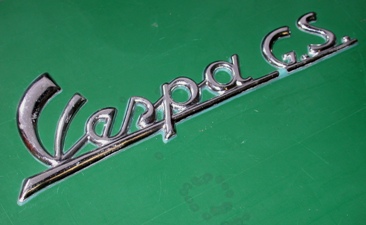
-
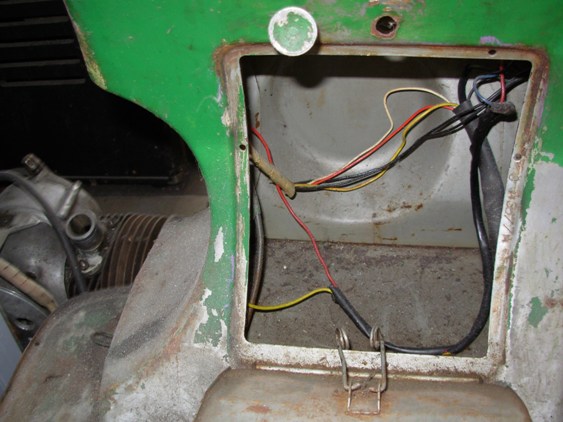
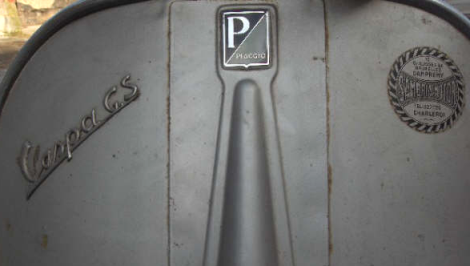
As promised, some additional information about the MISA GS Vespa Most of the Belgian MISA Vespa GS can be recognised by a vertical positioned number behind the carburettor door. See picture below. Another important indentifying mark is the "Vespa GS" name on the legshield. These name plates were special made for MISA and were glued on the legshield. See second picture. So, you never should find any mounting hole on an original MISA GS! All the MISA GS Vespas I have seen are in metallic grey. Perhaps these white models were made for the Austrian market? I am trying to collect as much as possible information about the Belgian MISA vespas. This topic is really an addition, since MISA information even in Belgium is hard to find. If anyone has any additional information, pictures, copies of papers referring to MISA and so on, I would be very grateful if you let me know. On my side, I like to share my limited MISA knowledge and information with people of the same mind. Regards, Defed1
-
Super Restauration! Ich versuche heute abend noch etwas Misa info und Misa Kennzeichen dabei zu setzen, aber dann in Englisch. Grusse aus Belgien Defed1
-
Hi Germany, Can anybody tell me if there is any visual difference between a German (Augsburg) and an Italian GS3 "naked" frame? I ask this because during the late fifties, early sixties there was a company in Belgium, called M.I.S.A., who assembled vespa scooters for the Belgian and Holland market. It was told me that the main scooter parts (like frame and motor) came from Italy. But, in Belgium there are quite a few Vespa GS3 scooters having a "VD2TS" frame number prefix and these scooters were assembled in Belgium! So, if I know the difference between an Italian and a German GS3 frame, I can tell for sure where the M.I.S.A. GS3 frames came from... It was also told me that the steel material of the German frame is thicker than the Italian frame. Is this true? Thanks a lot for any suggestion Defed 1 from Belgium
-
Hi vespa-people, I live in Belgium and prefer to reply in English, because my German is even worse. I have some additional information on the Vespa VGL1, VGLA and VGLB scooters. These were also assembled in Belgium (company M.I.S.A.) during the late fifties, early sixties. They looked identical to the Italian VB1, VBA, VBB vespa's, but with 10" tires. They also had a "Muscheltacho", a round headlamp and the Vespa-logo on the mudboard was different.